What does “smart home” mean?
To be considered a smart home, a house needs several of the following technologies:
- Smart speakers
- Smart lighting
- Remote control electronics (i.e, door locks, thermostats)
- Security cameras
There aren’t any solid thresholds for deeming a home as “smart.” You don’t need to install a specific number of smart devices to meet the criteria for a smart home.
The good news about smart homes is that you can scale up the amount of technology that they use to meet your needs. For example, you can add smart locks to doors, install more cameras and connect everything to your home hub. Your smart home is endlessly customizable.
How does a smart home work?
A smart home relies on smart devices, a reliable internet connection and a central way to control everything.
Smart devices
A smart home includes smart variations of common household devices. These include:
- Thermostats
- Lighting
- Cameras
- Door locks
- Appliances
Each smart device connects to your home’s Wi-Fi network, allowing it to send and receive data. They can also send alerts to your phone. For example, a connected refrigerator can tell you when it’s time to replace the water filter. Likewise, your smart lock can remind you that you forgot to lock the front door.
If you need to address a concern, you can do so directly from your phone. You can lock your door, adjust the thermostat, or even order a new filter for the refrigerator.
Home hubs and voice assistants
Voice assistants like Google Home or Amazon Echo have come to mean the same thing as smart home technology. These home hubs give you control of your other tech, such as your smart locks.
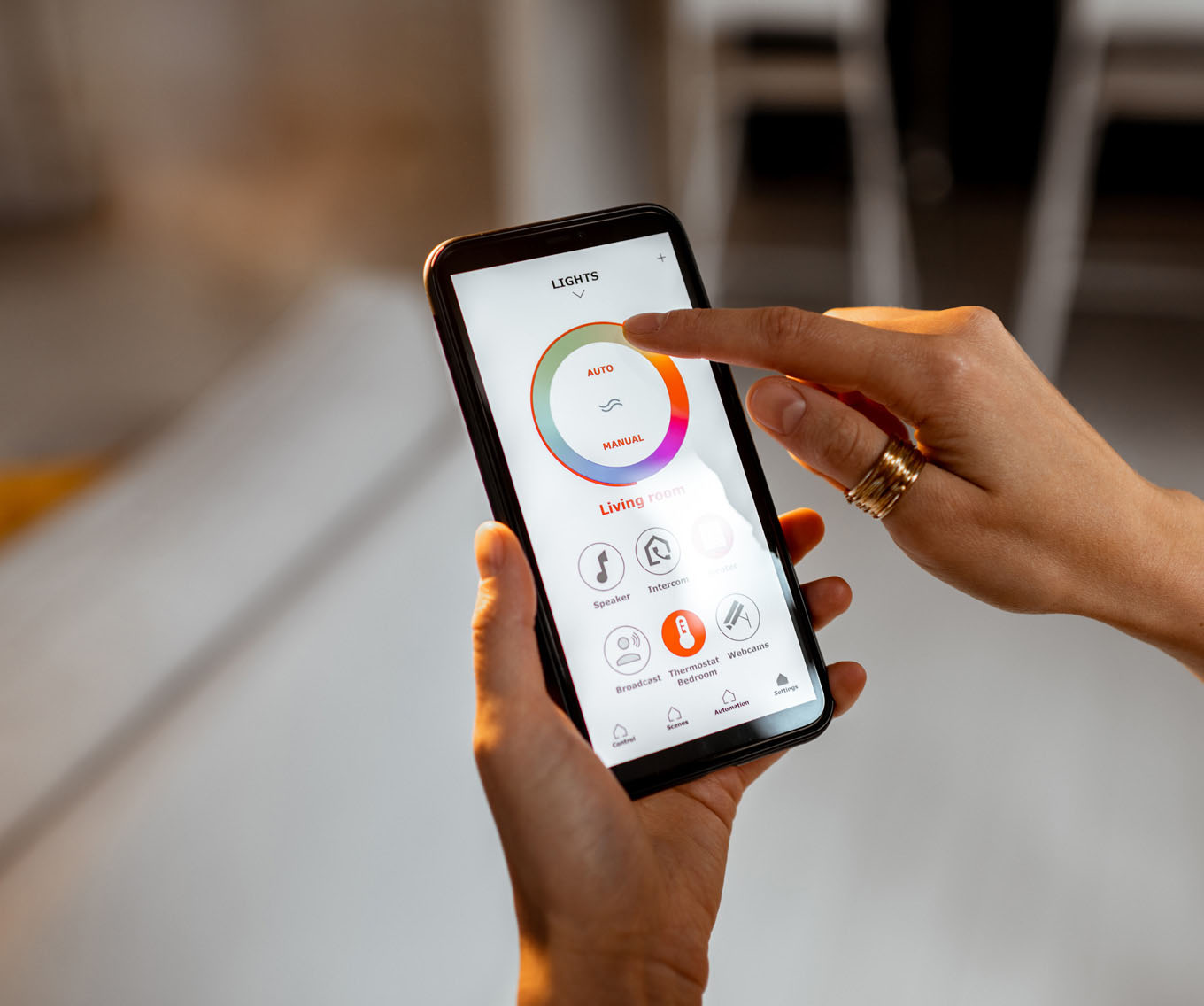
You can take action with simple voice commands or a single app. Home hubs make it easier for you to create routines that fit your lifestyle. You can program your thermostat to adjust the temperature when you leave for work and return home. You can also program the lights to dim at specific times or lock your door without lifting a finger.
Common smart home devices
You can make your smart home as simple or as advanced as you want. Some homeowners start with one device at a time. Others install many pieces of technology all at once. Consider these options as you start your journey toward a smarter and more convenient living space:
-
Smart speakers
A smart speaker like Google Home or Amazon Echo is a great starting point for most homeowners. These speakers act as your own personal voice assistant and control centers. When you connect other smart devices, you can control them from your home hub. You can also ask the voice assistant to:
- Answer questions
- Play music
- Set reminders
- Order items
- Manage your routine
If you already have other smart devices in your home, make sure you choose a compatible home hub or speaker. Otherwise, you may not be able to use all of the features that it includes.
-
Smart lighting and thermostats
Smart lighting lets you adjust brightness, color and schedules from your phone. You can also automate your lights based on the time of day or occupancy.
Smart thermostats help you manage HVAC usage based on your lifestyle and occupancy habits. These devices make your home more energy efficient and can reduce your heating and cooling costs.
-
Smart home security systems
A smart home security network consists of devices such as:
- Security cameras
- Motion sensors
- Video doorbells
- Smart locks
These tools allow you to track activity in real time. You can receive alerts directly to your phone and remotely control access to your home. These systems can give you peace of mind, especially if you are buying your first home or are living alone.
What are the benefits of a smart home?
Using technology can simplify your life considerably. The benefits of a smart home include the following:
- Convenience: You can manage your lights, temperature settings and devices with a smartphone or voice command
- Energy Efficiency: Smart thermostats and lighting can help reduce energy usage and utility costs
- Safety: You can watch your home remotely with cameras, alarms and smart locks
- Customization: Smart devices let you create routines that fit your daily schedule and preferences
- Accessibility: Smart features can be especially helpful for those with mobility needs
These advantages can make everyday living simpler while allowing for long-term savings.
Do smart homes add value when buying or selling?
Yes, home buyers can be interested in smart homes. Millennials and Gen Z individuals may be good target buyers. But you shouldn’t invest in major smart home upgrades to increase the resale value of your home. Smart devices don’t always lead to a dollar-for-dollar increase in home value.
If you already have smart technologies in your home, using them as selling points can help you unlock more value. For example, a smart security system can give prospective buyers peace of mind. Likewise, smart thermostats are a good selling point. They can help the next homeowner save on heating and cooling costs.
Smart home technology is best when you combine it with renovations and upgrades. Your home is a system. Smart tech makes that system work more efficiently. It also creates a more convenient living environment for your family. When everything works together, you can relax.
What to consider before setting up a smart home
Before investing in smart home products, here are some things you should consider:
-
Compatibility and ease of use
Not all smart devices work together. Some systems only work with specific ecosystems. Google’s growing collection of devices is one example. Others are more flexible, meaning you can mix and match devices to suit your needs.
Typically, you should choose your preferred home hub first and build out from there. Doing so will make setting up and managing your devices much easier.
You should also focus on ease of use, especially if you don’t consider yourself tech-savvy. Choose systems that have softer learning curves so you can get to know how they work quickly. If the technology is tedious to use, it’s going to make life more frustrating, not more convenient.
-
Privacy and security
Smart home systems rely on an internet connection. This means that cybersecurity is an important factor. Use strong passwords, enable two-factor authentication and keep devices updated. Knowing how your security system works will help you decide what technology to use.
-
Costs and ongoing maintenance
Smart home devices vary in price. While some upgrades are affordable, others need a larger upfront investment. If you want to spread out your costs, consider purchasing one or two pieces of equipment at a time.
You’ll also need to consider ongoing maintenance and upkeep. For example, purchasing smart or Wi-Fi-enabled lightbulbs is a recurring expense.
-
Is a smart home right for you?
Investing in a smart home is about choosing technology that supports how you live. Knowing what options are out there can help you make informed decisions. You’ll want your technology to fit your lifestyle and long-term goals. Use the insights above to invest in smart home tech that delivers lasting value for you and your home.