What is a condo?
A condo is short for condominium. When you buy a condo, you own the inside of your unit, but you share ownership of the rest of the building with other condo owners.
Condos are common in cities, vacation areas and places where space is limited. They can be found in low-rise buildings or tall high-rise towers.
What condo ownership includes
When you buy a condo, you typically own:
- The interior walls
- Floors and ceilings
- Fixtures and finishes inside your unit
Everything outside your unit — like hallways, elevators, roofs and landscaping — is shared. These are called common areas.
A condo board manages those shared spaces. The board is usually made up of other condo owners who help set rules, manage budgets and oversee home maintenance.
Typical condo features and amenities
Condos often appeal to buyers who want convenience. Many buildings offer shared amenities like:
- A fitness center
- Pools
- Community rooms
- Security or front desk services
Because units are stacked or side by side, condo living usually means sharing walls or ceilings with neighbors. You may hear noise more than you would in a detached home, especially in larger buildings.
Condos also tend to have limited or no private outdoor space. Instead, outdoor areas are shared, such as courtyards or rooftops.
What is a townhouse?
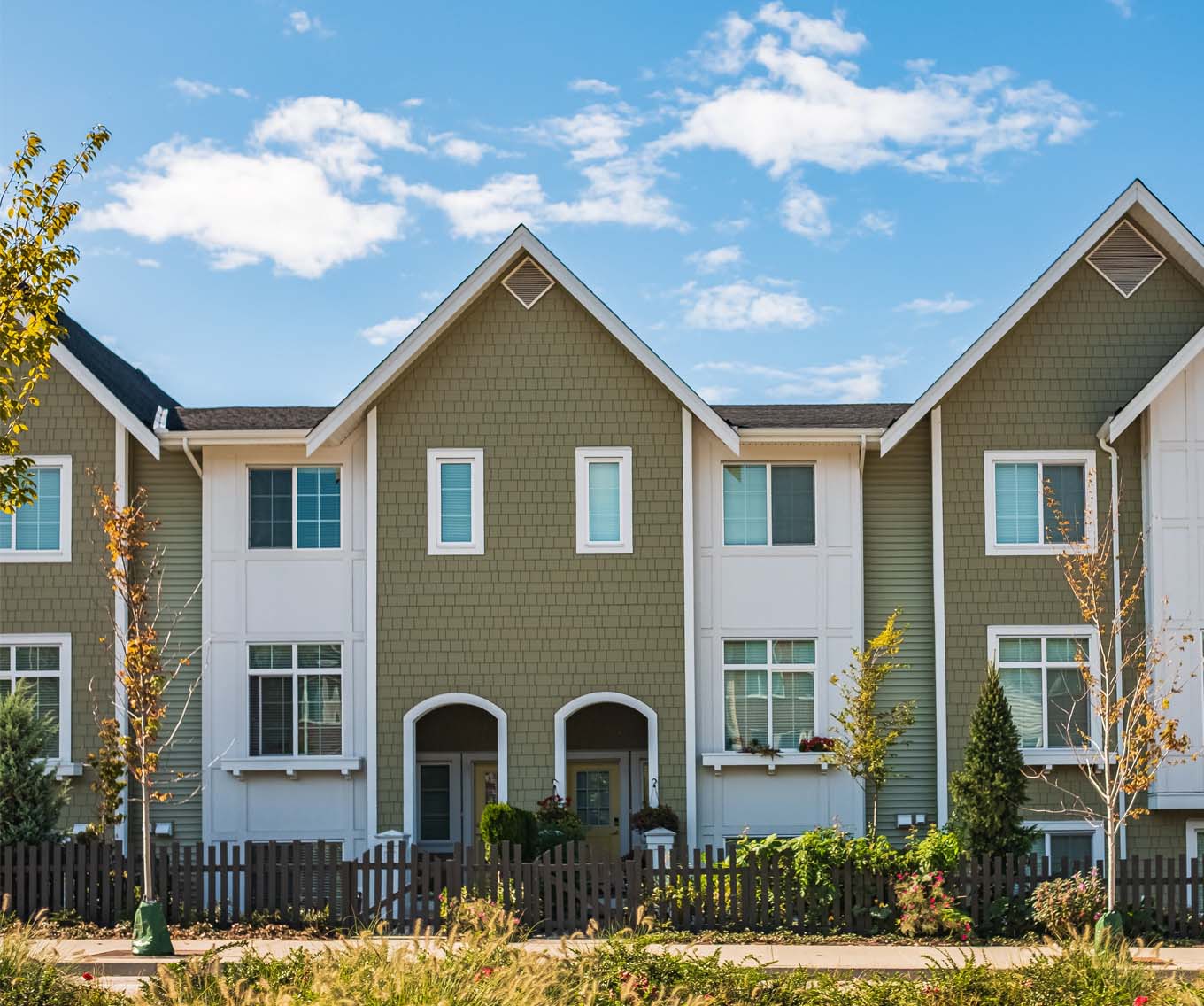
A townhouse is a home that shares one or more walls with neighboring units but is built more like a traditional house. Townhouses are often part of planned communities and can look like single-family homes from the outside.
They’re common in suburbs and growing urban areas where buyers want more space but not the upkeep of a detached home.
What townhouse ownership includes
Townhouse owners usually own:
- The interior of the home
- The exterior walls
- The roof
- The land the home sits on
This often includes a yard, patio or deck. That private outdoor space is a big draw for many buyers.
Some townhouse communities still have HOAs, but ownership is typically more complete than with a condo.
How townhouses differ from condos
The biggest difference is structure and responsibility. Townhouses are side-by-side homes, not stacked units. You may still be sharing walls, but you won’t have neighbors above or below you.
Townhouses usually offer:
- More square footage
- Multiple floors
- Fewer shared amenities
- More privacy
For buyers who want space but aren’t ready for a fully detached home, townhouses can feel like a middle ground.
Condo vs. townhouse: Key differences
While both options offer benefits, the details can make a big difference in daily life.
Ownership and property boundaries
With a condo, you own the interior only. Everything else is shared. With a townhouse, you usually own both the home and the land.
This affects maintenance, insurance and even how you renovate your space.
Shared walls, privacy and outdoor space
Both condos and townhouses involve walls with neighboring homes. But the experience is different.
Condos often mean:
- Neighbors above and below
- Less privacy
- No private yard
Townhouses usually offer:
- Neighbors only on one or two sides
- More separation
- A private yard or patio
If privacy and outdoor living matter to you, that difference can be important.
Amenities and common areas
Condos tend to shine here. Many buildings offer a gym, pool or lounge — all maintained for you.
Townhouses may have shared green space or a playground, but large amenities like a fitness center are less common.
HOA fees and monthly costs
Both condos and townhouses may come with homeowners association (HOA) dues, but they’re not the same.
What condo HOA fees usually cover
Condo HOA fees are often higher. That’s because they typically include:
- Building maintenance
- Exterior repairs
- Insurance for the structure
- Landscaping
- Trash and snow removal
- Amenities
These monthly fees can simplify budgeting, but they also add to your housing cost.
How townhouse HOA fees compare
Townhouse HOA fees are often lower. They may cover:
- Landscaping in shared areas
- Road or sidewalk maintenance
- Community amenities
Some townhouses have no HOA at all. Others offer optional services. It varies by community, so it’s always worth asking.
Cost and financing considerations
Price is often a deciding factor, but it’s not just about the listing price.
Purchase price, insurance and maintenance
Condos usually cost less upfront than townhouses or single-family homes. That can make it easier to buy a condo, especially for first-time buyers.
Insurance is also different:
- Condo owners usually need a policy that covers the interior only
- Townhouse owners often need a policy similar to a single-family home
Maintenance costs can balance out. Condos have higher HOA fees but fewer surprise repairs. Townhouses may have lower fees but more personal responsibility.
Financing differences buyers should know
Financing can differ by property type. Some condos must meet lender requirements related to the building, HOA budget or owner occupancy.
Your credit scores, income and debt still matter most. But condos can add an extra layer of review.
A loan officer can help you understand what to expect before you make an offer.
Which option is right for you?
There’s no one-size-fits-all answer. The right choice depends on your lifestyle, budget and future plans.
Who may prefer a condo
You might prefer a condo if you:
- Want low maintenance living
- Like shared amenities
- Plan to live in a city or downtown area
- Travel often
- Want predictable monthly costs
Condos can be a great fit for first-time buyers, retirees or anyone who values convenience.
Who may prefer a townhouse
A townhouse may be right for you if you:
- Want more space
- Value privacy
- Need outdoor space
- Plan to stay long term
- Want a home that feels more traditional
Townhouses often appeal to growing households and buyers transitioning from apartments.
Next steps before you buy
Whether you choose a condo or a townhouse, understanding the differences puts you in a stronger position.
Before you make a move:
- Review HOA rules and fees carefully
- Think about your lifestyle now and later
- Consider long-term resale value
- Talk with a trusted real estate agent
- Speak with a loan officer about financing options
Asking the right questions early can save you time, money and stress — and help you feel confident in your decision.
If you’re ready to explore your options, a loan officer can walk you through how each property type may affect your loan, monthly payment and overall budget.